


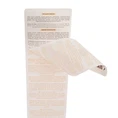

I. Standardized Operating Procedures
1. Before replacement, verify that the content and design of the new label fully comply with national standards and are consistent with the original label information to avoid misapplication.
2. When removing old labels, retain some identifiable warning content first. Completely remove the old labels only after the new labels are affixed to avoid any warning gaps.
3. After replacing multiple labels, strictly follow the order of "Warning → Prohibition → Instruction → Reminder" to ensure compliance with warning logic.
II. Material Compatibility
Select appropriate materials based on the usage scenario: choose waterproof and weather-resistant PET for humid/outdoor environments, and choose corrosion-resistant materials for chemical contact scenarios to prevent rapid fading and peeling.
III. Improved Management Mechanisms
1. Establish a label ledger, recording replacement time, location, and responsible person. Inspect the label status every six months to proactively identify potential damage.
2. For special scenarios such as hazardous chemical containers, develop specific replacement SOPs, and assign dedicated personnel to supervise the entire operation to prevent violations.
3. After the replacement is completed, on-site verification is conducted to confirm that the label is in a conspicuous position, unobstructed, and meets the line-of-sight recognition requirement of 1.5-2 meters.
