


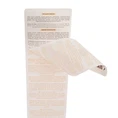

Three criteria for passing the static water immersion test:
1. Undamaged physical structure: After the test, the label shows no bubbling, delamination, curling, or cracking. The material does not swell or become brittle due to water absorption, and the label remains flat and adhered.
2. Clear and legible information: All key information-including chemical names, pictographs, signal words (such as "Danger"), hazard statements, precautions, emergency contact numbers, etc.-is clear, unfaded, and free of ink smudges or runoff. The boundaries between text and graphics are clear.
3. Strong and reliable adhesion: The label does not show edge lifting, slippage, or detachment. The adhesive layer does not fail due to water penetration and remains firmly attached to the original container surface. It is not easily peeled off even with light rubbing or scratching.
Special reminder: If the label contains a QR code or barcode, it must still be readable by a standard scanning device after the test; otherwise, it is considered a functional failure.
Standard Test Conditions (Based on GB/T 4208-2017):
Water Depth: The top of the label should be at least 0.15 meters above the water surface, and the bottom should be at least 1 meter below the bottom of the tank.
Duration: Continuous immersion for 30 minutes (corresponding to IPX7 rating).
Water Temperature: Room temperature (15–35℃), with a temperature difference of no more than 5K from the sample to avoid thermal shock affecting the results.
State: The sample should be completely submerged under normal use conditions, without additional sealing or protection.
