


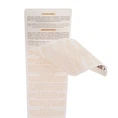
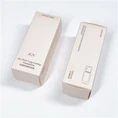


I. Establish a regular review system
1. Update cycle: Under normal circumstances, labels need to be fully updated every 5 years, in sync with the Safety Data Sheet (SDS).
If the environment is harsh (e.g., high temperature, humidity) or the chemicals are volatile, it is recommended to shorten the review period to every 3 years.
2. Review content: Check whether the label is complete and the information is accurate (e.g., chemical name, pictograms, signal words, etc.).
Confirm that the label is firmly affixed and that the material is waterproof and corrosion-resistant.
II. Key scenarios triggering updates
1. Regulatory changes: If the GHS system is updated (e.g., adding carcinogens) or regional regulations are adjusted (e.g., the EU REACH regulation is revised), label updates must be completed during the transition period.
2. New hazard discovery: For example, if a plasticizer is restricted due to newly discovered reproductive toxicity, the label must be revised immediately.
3. Composition changes: If the chemical formulation or process is upgraded (e.g., solvent replacement, change in reaction conditions), the GHS classification must be reassessed and the label updated.
III. Updated Management Measures
1. Version Control: After updating, the version number and effective date must be clearly marked, and the old version must be recalled to avoid misuse.
2. Distribution and Training: Distribute the new labels to customers, transportation companies, and internal departments, and organize training to ensure relevant personnel understand the changes.
3. Electronic Management: Adopt an electronic MSDS management system to improve distribution efficiency and tracking capabilities, but ensure the authenticity and completeness of the electronic version.
IV. Other Precautions
1. Simplified Small Packaging: For packaging smaller than 100mL, label content can be simplified, but core information such as chemical identification, pictograms, and signal words must be retained.
2. Multi-Layer Packaging: Inner packaging must be labeled. If the outer packaging is already labeled and the inner packaging label is transparent, additional labeling is not required; if the outer packaging is opaque, the inner packaging label must be clearly visible.
3. Label Handling: For containers or packaging containing hazardous chemicals, labels should only be removed after confirming that the hazard has been completely eliminated.