


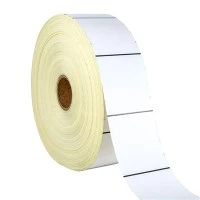
As a specialty labels supplier, I've spent years helping businesses across healthcare, logistics, and retail solve the quiet, costly problem of label integrity gone wrong. I've seen a direct thermal label 4x6 for a perishable shipment fade mid-transit, a silver security sticker peel off during a warehouse shift, and a multi-layer pharmaceutical adhesive label delaminate right before a patient care round. These aren't just small inconveniences-they erode trust, waste inventory, and can even compromise safety in regulated industries. The good news? Maintaining label integrity during storage isn't random; it's a science rooted in material science, environmental control, and strategic handling practices tailored to the unique properties of specialty labels. Let's break down what I've learned over thousands of client projects, so you can protect your labels from the time they leave our facility to the moment they're applied to your product.
First, it starts before the labels ever hit the shelf-with how we package and ship them from our facility, but this foundation translates directly to your storage processes. Specialty labels aren't like generic printable label stickers you might print at home; they're engineered with specific face stocks, adhesives, and liners to perform in extreme conditions. For example, a custom QR and bar code label printing for cold chain logistics needs a low-temperature-resistant adhesive, while a silver security sticker uses a metallic face stock that's more prone to scuffing if not wrapped correctly. When we ship orders, we use moisture-resistant corrugated boxes with dust-sealed liners, but that same logic applies to your in-house storage: keep unopened label rolls in their original, sealed packaging until ready to use. Why? Exposed face stocks can absorb ambient humidity, causing adhesive to weaken or face stock to warp, while unprotected QR/bar code labels can scratch during stacking, making scanners unreadable. I once had a client who stored 10,000 custom barcode label rolls in an unconditioned warehouse next to a loading dock; after three months, 22% of the rolls had adhesive breakdown that required full replacement. Simple fix: keep sealed packaging away from direct sunlight, vents, and exterior walls where temperature swings are most extreme.
Next, environmental control is the non-negotiable backbone of label storage integrity. Most specialty labels have specific temperature and humidity thresholds that are not negotiable. Let's talk data: according to the Specialty Graphic and Imaging Association (SGIA), the optimal storage range for pressure-sensitive labels (the majority of our product line, from direct thermal label 4x6 to multi-layer pharmaceutical adhesive label) is 68–72°F (20–22°C) with 40–50% relative humidity (RH). Deviating outside this range creates predictable problems. Too much humidity (above 60% RH) causes liners to absorb moisture, leading to misaligned printing heads and adhesive transfer to the back of adjacent label rolls. Too little humidity (below 30% RH) dries out acrylic adhesives, making them brittle and prone to peeling or cracking. For pharmaceutical labels, which are regulated by the FDA, this is even more critical: a multi-layer pharmaceutical adhesive label that's stored in a dry, overheated space might have its adhesive strength reduced by 30% per USP Class VI testing, putting drug labeling compliance at risk. I've worked with a pharmaceutical client that failed an FDA audit because they stored multi-layer labels in a garage with RH levels of 70% over the summer-inspectors found that the top layer of the multi-label had lifted, and the inner information panel was no longer flat. The solution? Invest in basic climate control if you have large storage volumes: a portable dehumidifier for small warehouses, or a central HVAC system calibrated to hit those 40–50% RH marks. For smaller batches of silver security sticker, which often use thin metallic face stock, even minor humidity swings can cause edge curling-make sure these are stored in sealed plastic bins inside your climate-controlled space, not stacked on open pallets.
Handling during storage and rotation is another often-overlooked piece of the puzzle. Specialty labels, especially rolls, are not heavy pallets of boxes-their core structure is fragile. Improper stacking can crush label edges, causing the outermost labels on rolls to peel or tear, and misaligned rolls can scratch adjacent print surfaces. I recommend storing label rolls on their core axes, not flat, to prevent liner warping. When rolls are stored flat, the weight of upper rolls can compress the inner liner, creating a "ridge" that causes labels to tear when unrolled. I had a logistics client that stored direct thermal label 4x6 rolls flat on pallets; after two weeks, 15% of the rolls had liner compression ridges that made them unworkable on their automated label applicators. Rotation is equally important-use the FIFO (First In, First Out) method for your inventory. Specialty materials, like the adhesive on silver security sticker, have a shelf life (usually 12–18 months from manufacture) that decreases with improper storage. Old labels stored for 2+ years, even in optimal conditions, can lose adhesive strength or face stock adhesion. We always mark our order dates on the back of each label roll box, so our clients can easily rotate stock. If you're mixing new and old rolls, place older rolls at the front of your storage shelf so they get used first-this is a small habit that prevents avoidable waste. For flat label sheets (not rolls), stack them vertically in file cabinets or on flat shelves with dividers to prevent warping; never stack more than 50 sheets high, as the bottom sheets will bow and become difficult to feed into printers.
Then there's the nuance of specific label types-one size does not fit all when it comes to storage. As a supplier, every specialty label we create is engineered for a specific end use, so storage needs vary drastically. Direct thermal labels, for example, don't use ink-they rely on a heat-sensitive coating that fades when exposed to heat or light. Storing direct thermal label 4x6 in a sunny loading dock or near a heat vent is a fast track to unreadable labels, even if they're unopened. We recommend storing direct thermal labels in opaque, sealed packaging to block UV rays (which accelerate fading) and keep them away from any heat sources above 75°F. Silver security sticker, on the other hand, is designed to resist tampering, but its metallic face stock is prone to scuffing. Store these in closed bins, not open shelves, to prevent abrasion during stacking. For pharmaceutical labels, multi-layer pharmaceutical adhesive labels have a delicate inner laminate that can delaminate if exposed to chemicals (think: cleaning sprays used in warehouses). Keep these away from cleaning supplies, solvents, or even aerosol cans, as fumes can break down the adhesive layers. Custom QR and bar code label printing for retail or logistics often has scannability requirements-any scuffing, warping, or adhesive residue can make a scanner miss a code. For these, store rolls in individual plastic bags to block dust, which is a top cause of scanner errors (dust particles can interfere with the QR code's dark and light modules).
Common mistakes I see clients make time and again: ignoring expiration dates, mixing label types in storage, and not testing stored labels before application. Even with perfect storage, specialty labels have a shelf life-we print a manufacture date on every box, and we advise clients to test a small sample of labels before applying full batches, especially if the labels are over 12 months old. A simple test for adhesive strength: apply a label to a standard surface (like cardboard or plastic, matching your end use) and peel it off after 24 hours. If any adhesive remains on the surface, or if the label's face stock tears instead of the adhesive releasing, it's time to replace that batch. For security labels, do a tamper test: peel a silver security sticker off a test surface-if it leaves no residue (it should break or show "VOID" text on removal), it's still good. For bar code labels, scan a sample with your actual printer/scanner to make sure the lines are readable; I've had clients apply 500 custom QR labels only to find scuff marks from storage made half of them un-scannable, which cost them a day of delayed shipments.
At the end of the day, maintaining label integrity during storage is a partnership between our team as your specialty labels supplier and your internal processes. We engineer every label to perform, but your storage habits determine how long that performance lasts. Whether you're ordering custom QR and bar code label printing for your logistics network, direct thermal label 4x6 for your e-commerce shipments, printable label stickers for in-house branding, silver security sticker for anti-counterfeiting, or multi-layer pharmaceutical adhesive label for medical compliance, small changes to how you store, rotate, and protect your labels will save you from costly delays, waste, and compliance issues. If you're evaluating your storage practices or need a new batch of labels tailored to your industry's needs, don't hesitate to reach out to our team to discuss your specific requirements. We can help you select the right label materials and provide tailored storage guidelines to ensure your labels stay intact from our facility to your customer's hands.

