


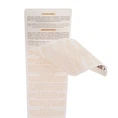

1. Natural air drying: Suitable for situations where use is not urgent and the environment is well-ventilated. Place the labels in a well-ventilated area, allowing airflow to carry away the moisture. However, this may take longer in humid weather.
2. Desiccant drying: Place desiccants such as silica gel or montmorillonite near the labels. These absorb moisture and are suitable for humidity-sensitive applications such as precision instruments or electronic equipment.
3. Hot air drying: Use a hot air blower or hairdryer (be careful not to hold it too close or use too high a temperature) to dry the labels. Suitable for urgent use or when the labels are heat-resistant.
4. Compressed air drying: Use compressed air to quickly remove moisture. Suitable for heat-sensitive or complex-shaped labels, but be careful not to blow away small parts.
5. Vacuum drying: Place the labels in a vacuum environment; the moisture evaporates quickly. Suitable for labels requiring high dryness and not afraid of vacuum conditions.
6. Air drying: Use nitrogen or compressed air to dry the labels. Suitable for labels with sensitive surfaces that cannot withstand high temperatures.
VII. Precautions Before choosing a method, check the label material. Avoid using high temperatures or chemical methods to damage it.
After drying, check the label for damage. Replace it with a new one if necessary.
