


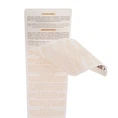

I. Polyester Film (PET)
Characteristics: High strength, high temperature resistance (up to 150°C), chemical corrosion resistance, dimensional stability, not easily torn or deformed.
Applications: Metal drums, reaction vessels, high-temperature equipment, strong acid and alkali containers.
Advantages: Maintains clear lettering even after long-term exposure to solvents and acid/alkali environments, making it the first choice for high-durability labels.
Printing Compatibility: Supports thermal transfer and laser printing; solvent resistance can be further improved when used with resin-based ribbons.
II. Polypropylene (PP) and PP Synthetic Paper
Characteristics: Good flexibility, water resistance, oil resistance, tear resistance, adaptable to curved packaging.
Applications: Plastic drums, squeeze bottles, daily chemical product containers, and humid storage environments.
Advantages: More durable than ordinary paper and lower cost than PET, suitable for moderately corrosive environments.
Special Types: PP synthetic paper combines the printability of paper with the durability of plastic, suitable for on-site labeling requiring frequent printing. III. Polyethylene (PE)
Characteristics: Soft, highly ductile, and conforms well to uneven surfaces.
Applications: Flexible packaging bags, film containers, low-temperature storage environments.
Advantages: Remains flexible at low temperatures, not easily brittle, suitable for frozen chemical packaging.
IV. Synthetic Paper
Characteristics: Made of plastic polymers, resembles paper in appearance but possesses waterproof, oil-proof, and tear-resistant properties.
Applications: Outdoor storage, high-humidity warehouses, marine packaging.
Advantages: Can be printed with ordinary printers and has durability close to that of plastic labels, suitable for transitional applications.
V. Self-adhesive Label Material Combinations
In practical applications, labels typically employ a "face material + adhesive layer + backing paper" structure, where:
Face material: PET, PP, PE, or synthetic paper
Adhesive layer: Acrylic adhesive (good weather resistance) or rubber-based adhesive (strong initial tack)
Covering film: A protective film can be added to enhance scratch resistance and chemical resistance.
A typical combination recommended for the chemical industry is: PET face material + acrylic adhesive + resin-based heat transfer ribbon, which can meet the needs of most harsh working conditions.
VI. Other High-Specification Materials
Polyimide (PI) labels: Temperature resistant up to 260°C and above, used in extreme high-temperature environments, such as heat treatment processes.
Aluminum foil labels: Possess excellent moisture and UV protection properties, suitable for long-term outdoor storage.
