


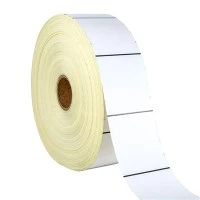
Are there any design restrictions for specialty labels? Well, that's a question I get asked a lot as a specialty labels supplier. In this blog, I'm gonna break down the ins and outs of specialty label design, including what restrictions you might face and how to work around them.
Let's start with what specialty labels are. Specialty labels are, well, special. They're not your average run - of - the - mill labels. They're designed for specific purposes, like tracking inventory with Direct Thermal Barcode Label, providing multi - layer information with Multi - layer Printed Labels, or withstanding harsh conditions like water with Waterproof multi - layer labels.
Design Considerations for Specialty Labels
When it comes to designing specialty labels, there are a few key factors to keep in mind.


1. Functionality
The primary purpose of a specialty label is to perform a specific function. For example, a barcode label needs to be scannable. That means the barcode needs to be clear, well - defined, and of the right size. If the barcode is too small or smudged, it won't scan properly, and that defeats the whole purpose.
Let's say you're designing a barcode label for a warehouse. The label needs to be placed in a way that it can be easily scanned by barcode readers. You can't just slap it on any old spot. You need to consider the orientation, the distance from other elements on the label, and the overall layout.
2. Durability
Specialty labels often need to withstand tough conditions. If you're using a label on a product that's going to be exposed to water, like a bottle of shampoo, you'll need a Waterproof multi - layer labels. These labels are designed to resist water, so the ink won't smudge or fade.
Durability also includes resistance to abrasion, chemicals, and extreme temperatures. For example, if you're labeling a product that's going to be stored in a freezer, the label needs to stay intact and legible at low temperatures.
3. Regulatory Requirements
Depending on the industry and the product, there may be regulatory requirements for the label design. For example, food labels need to include certain information like ingredients, nutritional facts, and expiration dates. If you're labeling a pharmaceutical product, there are even more strict regulations about what information needs to be on the label.
These regulations can limit your design options. You may need to include specific fonts, sizes, and colors to ensure compliance. But don't worry, there's still plenty of room for creativity within these constraints.
Design Restrictions
Now, let's talk about the actual design restrictions.
1. Size and Shape
The size and shape of a specialty label can be restricted by the product it's going on. For example, if you're labeling a small vial, you won't have a lot of space to work with. You'll need to be strategic about what information you include and how you format it.
Sometimes, the shape of the product also dictates the shape of the label. You might need to use a custom - shaped label to fit around a curved surface or to match the unique design of the product.
2. Color and Contrast
Color and contrast are important for readability. If the text on your label is too light or too similar in color to the background, it will be hard to read. You need to choose colors that provide enough contrast to make the text and images stand out.
However, there may be limitations on the colors you can use. For example, if you're labeling a product for a specific market, there may be cultural or brand - specific color preferences. You'll need to take these into account when designing your label.
3. Image and Text Quality
The quality of the images and text on your label is crucial. Low - resolution images or blurry text can make your label look unprofessional. You need to use high - quality graphics and fonts to ensure that your label looks good and is easy to read.
There may also be restrictions on the type of images you can use. For example, if you're using a logo or a trademark, you need to make sure you have the proper permissions.
Working Around Design Restrictions
Just because there are design restrictions doesn't mean you can't create a great - looking specialty label. Here are some tips on how to work around these restrictions:
1. Prioritize Information
When space is limited, you need to prioritize the information on your label. Decide what the most important information is and make sure it stands out. You can use larger fonts, bold text, or different colors to draw attention to the key points.
2. Be Creative with Layout
Even with size and shape restrictions, you can still be creative with the layout of your label. Use negative space effectively to make the label look less cluttered. You can also experiment with different alignments and arrangements to make the label more visually appealing.
3. Use Technology
There are many tools and technologies available that can help you design a great - looking label. For example, you can use graphic design software to create high - quality images and text. You can also use printing techniques like digital printing to achieve better color accuracy and image quality.
Conclusion
So, are there any design restrictions for specialty labels? Yes, there are. But with a little creativity and some careful planning, you can work around these restrictions and create a label that looks great and performs its function effectively.
If you're in the market for specialty labels, I'd love to chat with you. Whether you're looking for Direct Thermal Barcode Label, Multi - layer Printed Labels, or Waterproof multi - layer labels, we've got you covered. Contact us to start the conversation about your label needs.